Enterprises are increasingly adopting graph models to unify fragmented data and reveal the relationships that drive business growth. Graph data makes it possible to uncover connections that are often hidden in traditional systems, providing the clarity needed to understand customers, processes, and risks in context.
While graph models improve visibility and understanding, the greater opportunity lies in operationalizing graph data so it can actively support enterprise applications, workflows, and decision-making.
What does operationalizing graph data mean?
Operationalizing graph data means moving beyond using graphs as a static model for analysis and turning them into an active layer that supports enterprise systems in real time.
Instead of only representing relationships between entities, the graph becomes part of the operational infrastructure where data is continuously used to:
- support application logic
- enforce data governance and policies
- inform AI and automation workflows
- maintain context as data moves across systems
In this model, graph data is not just a way to understand relationships. It becomes a mechanism for acting on them. This builds on the underlying structure of graph data modeling and relationship representation, where entities and connections are captured as a unified data model.
From visibility to operational control in graph data
In practice, operationalizing graph data means the model is no longer only a representation of how entities relate. It becomes the foundation for granular control over how data is used.
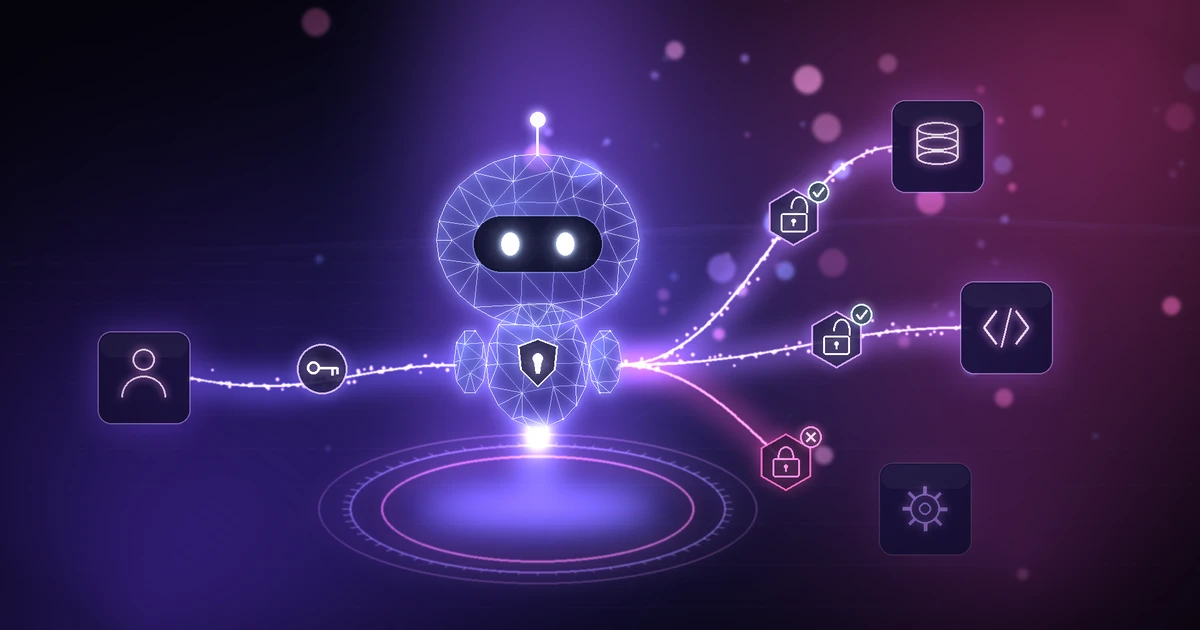
Metadata and relationships in the graph can be leveraged by externalized data control and authorization systems to enforce enterprise policies consistently across applications and environments.
This enables organizations to:
- apply governance dynamically at the point of use
- ensure consistent policy enforcement across systems
- maintain context as data is accessed and shared
As a result, graph data shifts from being a passive intelligence layer to an active infrastructure layer that applications, analytics, and AI systems can rely on directly.
Graph data as an operational layer for AI and applications
Once operationalized, graph data moves beyond exploration and analysis into live enterprise workflows, building on foundations established through graph data integration across enterprise systems.
Applications no longer query only raw values. They also use contextual metadata such as:
- data origin and lineage
- usage permissions and constraints
- trust and reliability signals
AI systems can use this context to:
- filter inputs dynamically
- apply governance rules during inference
- adjust behavior based on changing data conditions
Partner ecosystems can also consume shared data with embedded policies, ensuring that governance and context remain intact across organizational boundaries.
This is what transforms graph data from a structural model into a dependable operational resource.
Enterprise outcomes of operationalizing graph data
Operationalizing graph data produces outcomes that are directly relevant to enterprise priorities:
- Confidence in data-driven decisions: context and trust signals allow teams to act on data knowing its origins, conditions, and reliability.
- Faster scale-up of AI and automation: models can incorporate governance directly into data flows, reducing manual oversight.
- Secure collaboration across ecosystems: partners access data with usage rules intact, reducing compliance risks.
- Resilience under change: as systems evolve, operationalized graph models preserve continuity by keeping rules and context bound to the data.
From connected data to enterprise capability
Graph data provides the structure to capture relationships across the enterprise. Operationalization ensures that structure can be applied with confidence, consistency, and control. It is this progression – from connected records, to integrated applications, to operationalized intelligence – that allows enterprises to treat data not just as an asset, but as a capability that can be mobilized across every system, product, and partnership.