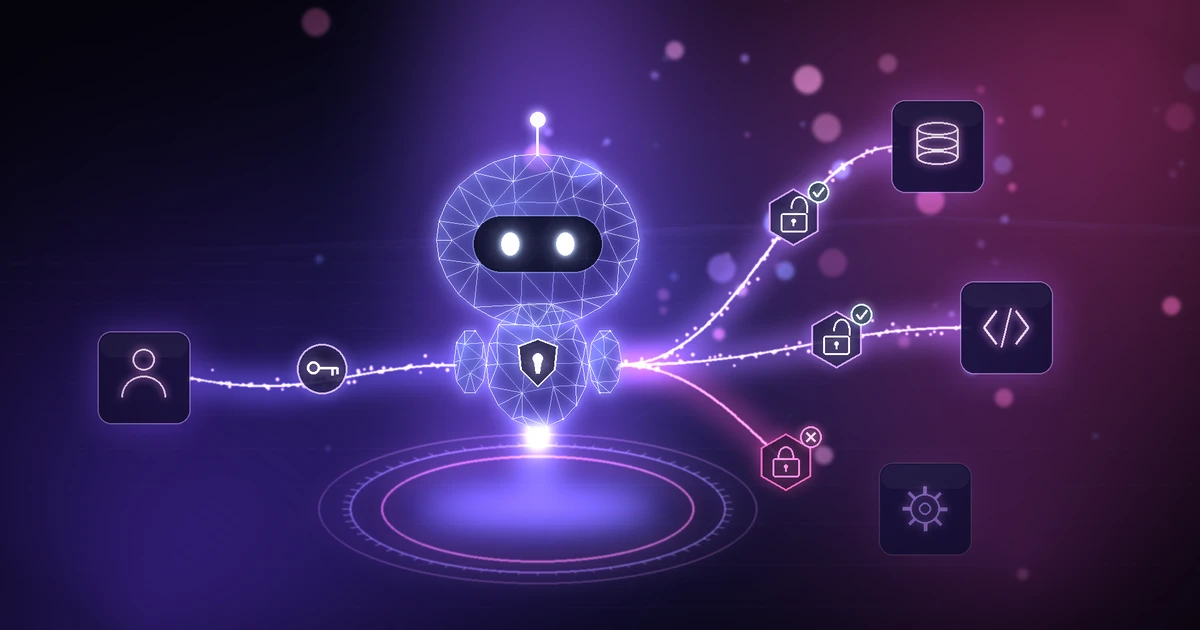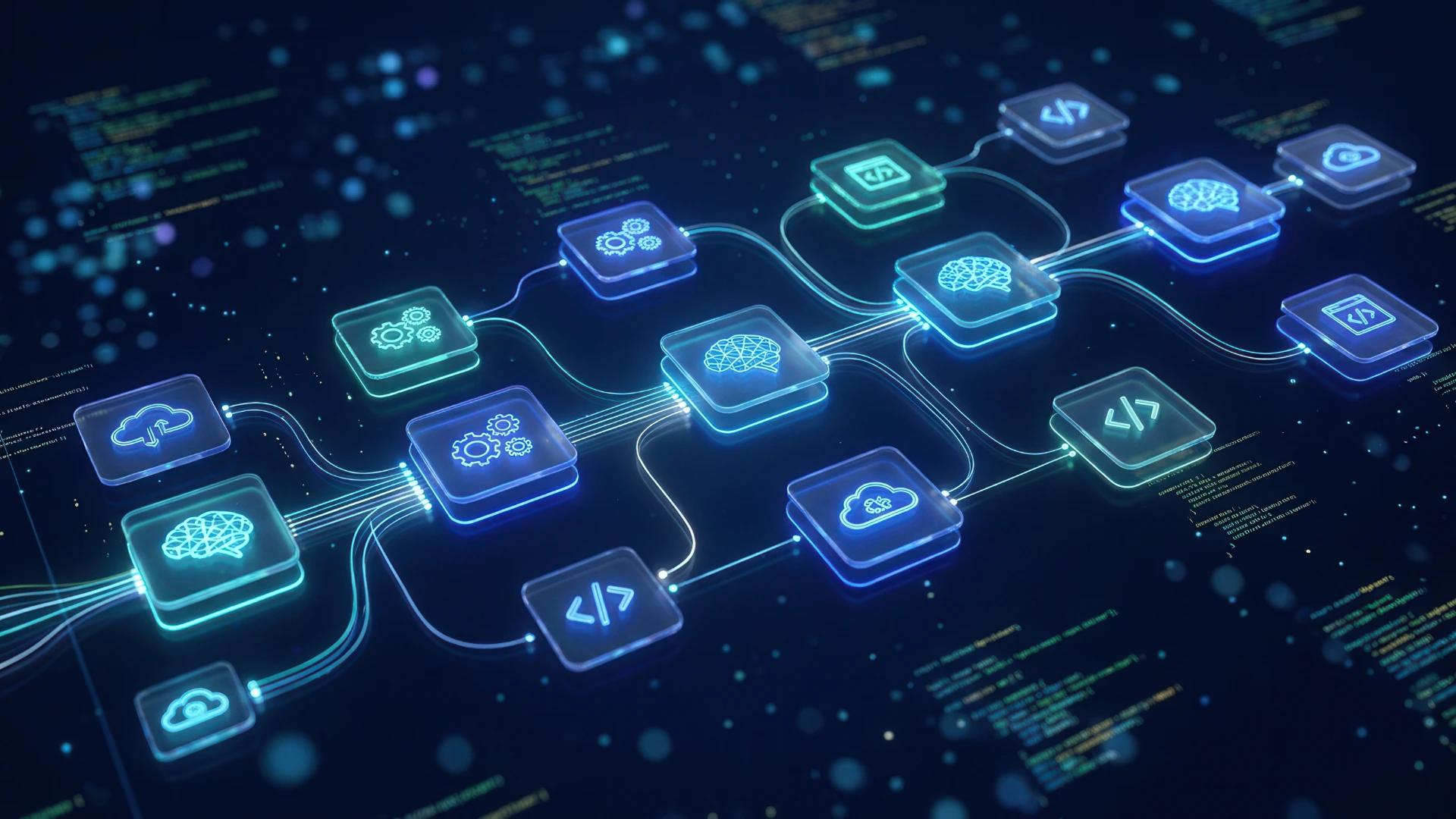
Agentic AI systems are increasingly moving beyond generating content or answering questions; taking a more active role in how digital work is carried out. Instead of only supporting decision-making, they are starting to help with execution. They interact with tools, systems, and even other agents to complete tasks end to end.
This marks a shift in how AI fits into software systems. We are no longer only dealing with systems that respond to prompts. We now deal with systems that work with some autonomy in workflows and environments. Understanding this shift is important for understanding how system design and security need to evolve.
What is agentic AI?
Agentic AI refers to AI systems designed to operate autonomously, making decisions and performing tasks independently in order to achieve defined goals. These systems can interpret intent, plan steps, and execute actions - often interacting with tools, software systems, other agents, or humans as part of completing a task.
Instead of producing a response for a user to act on, agentic systems can carry work forward themselves. This makes them fundamentally different from traditional AI systems, which remain passive and output focused.
How agentic AI systems work
Unlike traditional AI systems that respond to individual prompts, agentic AI systems operate in continuous loops of reasoning and action. They take in input, interpret intent, decide on a sequence of steps, and then execute those steps using available tools and systems.
This loop is ongoing rather than linear. Each action can influence the next decision, which means the system continuously adapts as it moves through a task. Over time, reasoning and execution become part of the same operating cycle rather than separate stages.
Agentic AI vs generative AI
Traditional AI systems, including generative AI models are primarily designed to produce outputs such as text, classifications, or recommendations. They operate within a clear boundary and their role ends once they generate a response.
Agentic AI systems extend beyond this boundary. They do not stop at producing information, but can turn that information into action. A single request can therefore lead to multiple downstream operations across tools, APIs, and enterprise systems. This shifts AI from a passive responder to an active participant in system behavior.
How agentic AI changes software architecture
When AI systems are limited to producing outputs, software architecture remains relatively predictable. Inputs lead to outputs, and execution is controlled by explicit user actions or predefined system logic.
Agentic AI removes this separation. Systems are no longer only responding to users but operating within the environments they are connected to. They participate in workflows, decide next steps, and trigger actions across integrated systems. As a result, system behavior becomes more dynamic and less deterministic.
What agentic AI means for enterprise systems
In enterprise environments, agentic AI systems can interact directly with APIs, databases, internal tools, and operational workflows. This enables a new level of AI-driven workflow automation where complex tasks can be executed across systems without manual coordination.
However, it also means AI systems become embedded within operational environments where their decisions can directly affect real systems and data. They are no longer isolated tools but active components in enterprise execution flows. This creates a new category of system behavior where interpretation and execution are tightly connected and introducing new operational risk.
Why agentic AI changes security assumptions
Once AI systems begin operating with this level of autonomy, control becomes fundamentally different. It is no longer only about what the system generates, but what it does as a result of interpreting intent and context. This is where traditional security models begin to show their limitations.
Next up: Why agentic AI breaks traditional security models (and what it means for agentic AI security)
In the next article, we explore why current security frameworks were not built for this shift, and why agentic AI breaks traditional security models.