These systems operate by perceiving their environment, processing data, following predefined objectives or tasks, and executing actions based on learned patterns and real-time inputs – without direct human intervention. Unlike traditional software, autonomous agents continuously learn and improve, enabling more sophisticated decision-making and automation.
Currently, enterprises deploy AI agents across various functions, including personalized recommendations, real-time anomaly detection, and automated decision-making. As AI technology advances, these agents will become even more capable, collaborating across teams, negotiating, and managing resources with minimal oversight.
With this growing autonomy comes increased security risks. Ensuring agents behave reliably, adhere to policies, and resist manipulation is critical to safeguarding enterprise systems and data.
Why traditional security approaches aren’t sufficient for AI agents
Traditional security frameworks were designed around static, human-driven systems, focusing primarily on controlling user access and monitoring fixed application behaviors. AI agents operate quite differently. They make decisions independently and at machine speed, adapting continuously based on new data and interacting dynamically with multiple systems. These characteristics present challenges that existing security models are not equipped to handle.
Because these agents act rapidly and autonomously, security models must go beyond static permissions to manage dynamic behaviors in real time. For example, an agent may access sensitive data in one context but require restrictions in another, depending on real-time factors such as data sensitivity, regulatory demands, or operational risk.
Accountability also becomes more complex when AI agents act without direct human intervention. Traditional security models struggle to trace decisions or actions back to specific entities, complicating compliance enforcement and incident investigations.
Securing AI agents demands new approaches that combine dynamic authorization, continuous monitoring, and adaptive risk management—capabilities that legacy security frameworks lack.
The key challenges in securing AI agents
Securing AI agents introduces a distinct set of challenges that go beyond traditional cybersecurity concerns. These challenges must be addressed to ensure agents operate safely, reliably, and in alignment with organizational goals.
- Ensuring agent identity and trustworthiness
Unlike human users, AI agents require robust identity frameworks that can verify their authenticity and establish trust before they interact with sensitive data or systems. Without strong identity assurance, malicious or compromised agents could infiltrate enterprise environments. - Managing autonomous decision-making and accountability
AI agents make decisions independently, which raises questions about accountability. Organizations must implement mechanisms to trace decisions back to specific agents and ensure those decisions comply with policies and regulations. - Controlling data access and usage dynamically
AI agents often access data in diverse contexts. Static access controls are insufficient; enterprises need dynamic, context-aware authorization that adjusts permissions based on the agent’s current task, environment, and risk factors. - Monitoring agent behavior in real time
Continuous monitoring is essential to detect anomalies or deviations in agent behavior that may indicate errors, misuse, or security breaches. Real-time insights enable rapid response and mitigation. - Integrating agent security into broader enterprise governance
Security for AI agents must align with overall enterprise risk management and compliance frameworks, ensuring consistent policies and controls across human and AI actors.
How to secure AI agents
As AI agents increasingly take on complex, real-world tasks, their security cannot rely solely on perimeter defenses or static policies. Instead, enterprises must adopt a holistic security framework that addresses the full agent lifecycle—covering identity assurance, dynamic authorization, continuous behavior monitoring, and governance integration.
This framework recognizes that AI agents operate in fluid environments, often collaborating with other agents and humans, making decisions with incomplete or evolving information. Security approaches must therefore be adaptive, context-aware, and capable of providing transparency into agent intent and actions.
Drawing from cutting-edge industry insights, successful strategies emphasize building trust through robust identity mechanisms, enforcing fine-grained, context-sensitive controls, enabling real-time anomaly detection, and embedding agent security deeply within enterprise governance and compliance processes.
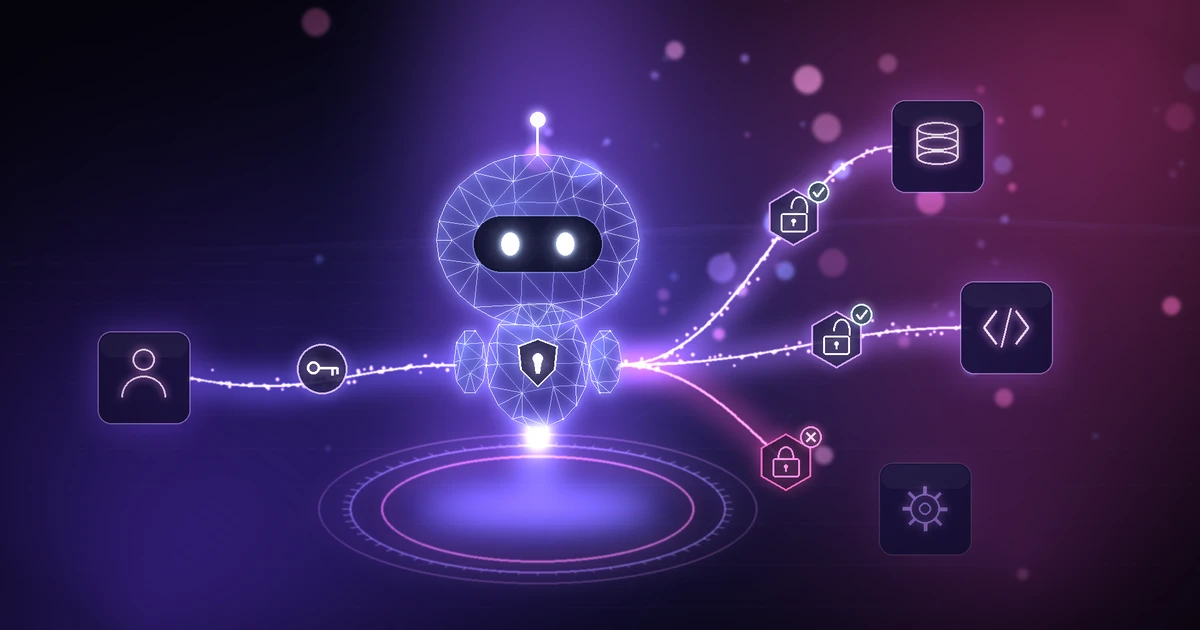
- Establishing trusted identities for AI agents: agents require unique, verifiable identities that can be cryptographically secured. This ensures that only authorized agents perform actions and access data. Lifecycle management, including provisioning, rotation, and decommissioning, is critical to maintain trust over time.
- Dynamic, context-aware authorization: Agents’ permissions should adjust in real time based on factors like current task, data sensitivity, operational context, and risk signals. Fine-grained access controls enforce least privilege dynamically, reducing the attack surface and preventing misuse.
- Continuous behavior monitoring and anomaly detection: AI agents act rapidly and often beyond direct human oversight. Implementing real-time monitoring with behavioral analytics and anomaly detection helps identify deviations that may indicate compromise, errors, or policy violations. Automated responses can isolate or remediate threats promptly.
- Integration with enterprise governance and compliance: Security controls for AI agents must align with overall enterprise risk management frameworks. This includes embedding agent governance within organizational policies, ensuring auditability, traceability, and regulatory compliance, and providing clear accountability mechanisms.
- Enabling explainability and audit trails: Transparency into AI agent decisions and actions is vital. Providing explainability supports trust, regulatory demands, and forensic investigations when incidents occur.
By combining these layered approaches, enterprises can effectively secure AI agents, unlocking their potential while managing risks inherent in autonomous operations.
Building robust security for AI enterprises
As AI agents become more prevalent and powerful, securing them is essential to safeguarding enterprise systems, data, and reputation. Unlike traditional software, these agents operate independently and at speed, requiring security approaches that are adaptive, context-aware, and integrated across the entire enterprise ecosystem.
By establishing trusted identities, implementing dynamic access controls, continuously monitoring behaviors, and embedding agent security within broader governance frameworks, organizations can manage the unique risks agents introduce. Moreover, fostering transparency through explainability and auditability builds the trust necessary for widespread adoption.
A robust security posture for AI agents not only mitigates risk but also unlocks new opportunities for innovation and efficiency, enabling enterprises to confidently harness the full potential of AI-driven automation.