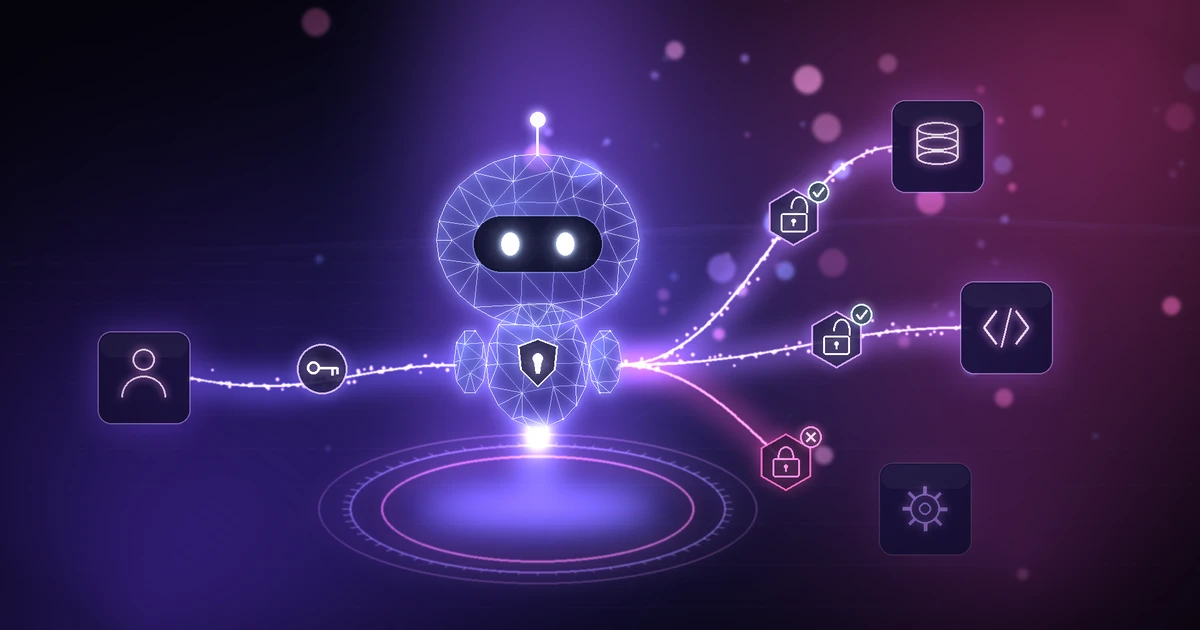
Zero Trust has become one of the most important security models in the enterprise. Its core principle is straightforward: never assume trust. Every request should be evaluated using current context, policy, and risk before access is granted.
Those principles remain just as relevant for AI agents, but autonomous systems introduce new challenges that traditional Zero Trust architectures were never designed to address.
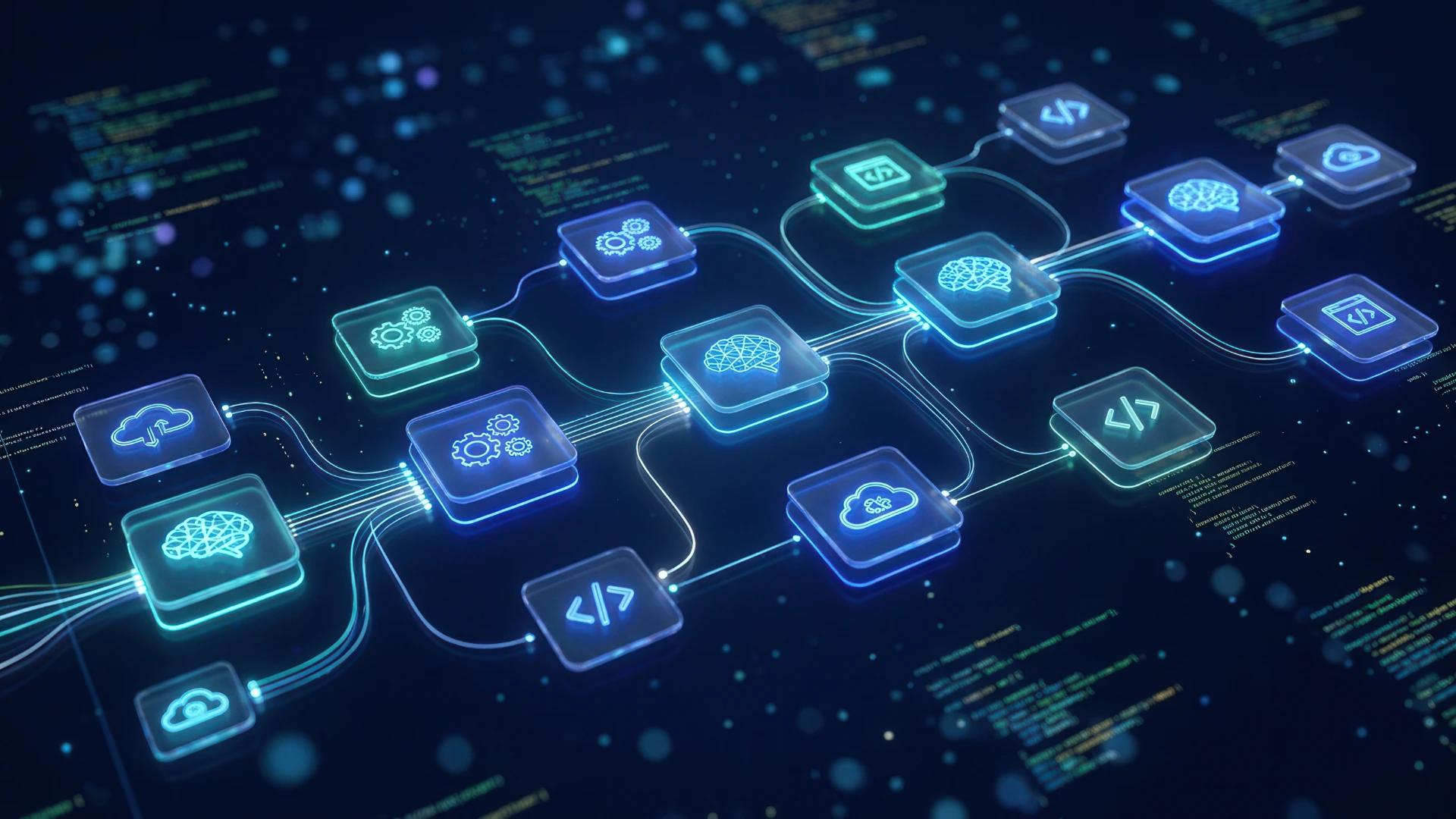
Unlike conventional applications, AI agents retrieve information, invoke tools, delegate work to other agents, and interact with multiple enterprise systems without requiring human approval for every step. A single user request can trigger dozens of actions across models, tools, APIs, and data sources in seconds.
Securing these autonomous workflows requires extending Zero Trust beyond authenticating an identity or authorizing a single request. Every action throughout the workflow must remain governed, traceable, and aligned with enterprise policy.
What is Zero Trust for AI agents?
Zero Trust for AI agents applies Zero Trust principles to autonomous AI systems.
Rather than trusting an agent after it has been authenticated, every action is evaluated continuously using the current context of the transaction. Authorization decisions are based on the identity of the requester, delegated authority, enterprise policy, the sensitivity of the requested resource, and the current state of the workflow.
This ensures AI agents receive only the access they need, only when they need it.
Why do AI agents require a different approach?
Traditional Zero Trust architectures were designed around users and applications performing relatively predictable actions.
AI agents behave differently.
A single request such as "Prepare tomorrow's executive briefing" may require an agent to search enterprise knowledge bases, retrieve customer records, access financial systems, summarize documents, invoke external models, and delegate specialist tasks to other agents before returning a response.
Each of those actions creates a separate authorization decision.
As organizations deploy increasingly autonomous systems, authorization is no longer a single checkpoint. It becomes a continuous process spanning the entire workflow.
Zero Trust must extend beyond the point of entry
Traditional security models often focus on the initial request. Once access has been granted, subsequent actions typically inherit that authorization.
Agentic workflows require a different model.
Users delegate work to AI agents. Those agents may delegate work to other agents, invoke MCP servers, call external tools, or retrieve data from multiple systems. Every handoff creates a new opportunity to verify authority, confirm intent, and enforce policy.
Achieving Zero Trust therefore depends on maintaining control across every interaction rather than only at the beginning of the transaction.
Maintaining visibility into the chain of delegation also preserves accountability. Every action should remain attributable both to the agent performing the work and to the original requester on whose behalf that work is being executed.
Context becomes a security signal
Every authorization decision depends on the context in which it is made.
Unlike conventional software, AI agents continuously create, consume, and act on new context as workflows progress. The same action may be appropriate in one situation and inappropriate in another.
Authorization decisions may depend on factors including:
- User relationships
- Data sensitivity
- Provenance information
- Previous workflow activity
- Historical decisions
- Business policies
- Environmental conditions
Context effectively becomes both operational memory for AI agents and a critical security signal for authorization systems. Maintaining that context allows Zero Trust policies to adapt as workflows evolve instead of relying on static permissions granted earlier in the transaction.
Why runtime authorization matters
Authorizing an AI agent once at the beginning of a workflow does not guarantee that every subsequent action should be permitted.
As agents discover new information, invoke additional tools, and delegate work, the conditions surrounding each authorization decision change.
Runtime authorization continuously evaluates every action using the current context, delegated authority, and intent of the transaction.
Rather than relying on permissions granted earlier, authorization remains aligned with the current state of the workflow, ensuring governance, accountability, and policy compliance regardless of how many agents or systems participate.
The core capabilities of Zero Trust for AI agents
Implementing Zero Trust for AI agents requires more than identity verification. Organizations should be able to:
- Continuously authorize actions throughout AI workflows
- Apply fine-grained policies using rich contextual signals
- Track delegated authority across multiple agents
- Enforce authorization at runtime as workflows evolve
- Maintain complete traceability across every decision
- Apply least-privilege access to tools, models, and data
Together, these capabilities extend Zero Trust from protecting identities to governing autonomous decision making.